


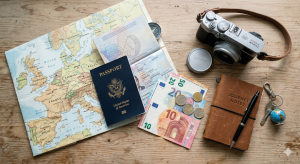
The golden rule of travel used to be "pack light." Today, it is "pack smart."
We are living in an era where the borders are open, but the friction is real. From unexpected airspace closures to the quiet rise of digital pickpocketing, the modern traveler needs a new toolkit. This isn't about being paranoid; it’s about being proactive. The goal isn't to be scared of the world; it’s to build a safety net so strong that you can forget it’s there and actually enjoy the sunset.
Here is the real-world guide to navigating the globe with the confidence of a local and the preparation of a diplomat.
Phase 1: The Digital Fortress (Before You Leave)
Your physical safety starts with your digital data. Long before you board the plane, you need to secure your virtual perimeter.
- The "Burner" Protocol: If you are traveling to a high-risk area, consider leaving your primary laptop at home. Travel with a "clean" device that only has the essentials. If it gets lost, stolen, or inspected, your life savings and personal photos aren't compromised.
- The Cloud Lifeline: Scan every single document—passport, insurance policy, prescriptions, and itinerary—and upload them to a secure cloud folder. If your bag disappears, you should be able to reconstruct your identity from a hotel lobby computer.
- Notify, Don't Broadcast: Tell your bank and the State Department (via the STEP program) where you are going. But keep it off social media. Posting "Off to Rome!" in real-time is just an advertisement that your house is empty. Post the photos after you get home.
Phase 2: The "Gray Man" Theory (On the Ground)
The best defense is not looking like a target. In security circles, this is called being a "Gray Man"—someone who is unforgettable because they are unremarkable.
- Dress Down: Leave the university hoodies, the flashy logos, and the expensive jewelry at home. Look at what the locals wear on a Tuesday, and try to match that energy. If everyone walks fast, you walk fast. If everyone is quiet on the train, you be quiet.
- The "Dummy" Wallet: Carry a cheap wallet with a bit of expired plastic and a small amount of cash. If you are mugged, hand it over immediately. You lose $20 and a fake credit card; they get a "win" and leave. Your real money stays safe in your internal pocket or money belt.
- Situational Awareness: Put the phone away. Walking while staring at Google Maps is the universal sign for "I am distracted and lost." Study the map in a café, then walk with purpose.
Phase 3: The Escape Hatch (Contingencies)
Optimism is not a strategy. You need to know what happens when the plan breaks.
- Cash is King: In a power outage or cyber-attack, Apple Pay stops working. Always carry enough hard currency (USD or Euros) to buy a meal, a hotel room, and a taxi ride to the embassy.
- The Medical Evac Clause: Read the fine print. Most standard insurance covers a hospital visit, but not a helicopter ride home. If you are going remote, ensure your policy includes "medical repatriation." It’s the difference between a $500 bill and a $100,000 bankruptcy.
Phase 4: The Decompression (Returning Home)
The trip isn't over when you land.
- The Digital Scrub: Change the passwords for any accounts you accessed over public Wi-Fi. It takes five minutes and closes the door on any digital hitchhikers.
- The Health Check: If you feel "off" a week after returning, don't ignore it. Tell your doctor exactly where you went. Tropical bugs often have a delay, and "I just have the flu" can be a dangerous assumption.
Travel is still the single best thing you can do with your time and money. The world is beautiful, and 99% of the people in it are kind. By taking these precautions, you aren't ruining the magic; you are protecting it.
Comments
No comments yet. Be the first to share your thoughts.
Log in to add a comment.