


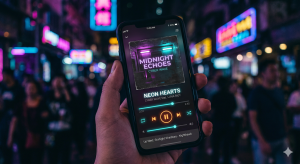
The dream of the "Spotify Millionaire" was always a bit of a mirage, but in 2026, the mirage has finally evaporated.
For the modern artist, the music industry has become a game of two halves. On one side, you have a streaming system that pays in fractions of pennies and a tidal wave of AI-generated content. On the other, you have a burgeoning "Micro-Fan" economy where artists are finding more financial freedom than ever before. If you’re a musician today, you aren’t just a songwriter; you’re the CEO of a media startup.
Here is how the landscape of sound is being rebuilt this year.
1. The Streaming Ceiling
The math of 2026 is brutal. With over 150,000 songs uploaded to streaming platforms every single day, "discovery" is no longer a given.
- The Problem: Major platforms have shifted toward a "two-tier" royalty system that effectively demonetizes tracks with lower play counts to combat "white noise" and botting.
- The Reality: For the emerging artist, a million streams might pay for a month’s rent, but it won't sustain a career. Streaming is now a loss-leader—it’s the flyer you hand out at the door to get people into your world.
2. The New Roadmap for Monetization
Since the "stream" is no longer the paycheck, artists are getting creative. The focus has shifted from the masses to the Superfan.
- Subscription over Singles: Platforms like Bandcamp and Patreon have evolved. Artists are offering "Inner Circle" memberships where fans pay $10/month for early demos, stems for remixing, and exclusive discord access.
- The Physical Resurgence: Vinyl isn't just for collectors anymore; it’s a crowdsourced insurance policy. Using "pre-order to press" models, artists ensure they never lose money on physical stock.
- Digital Collectibles 2.0: Forget the 2021 NFT hype. In 2026, "Limited Digital Editions" are used as digital tickets or keys to unlock real-world perks, like "guest list for life" or private listening parties.
3. The Suno Shift: AI as a Peer, Not a Replacement
The elephant in the recording studio is Suno. The AI music generator has reached a point where it can produce radio-ready tracks in seconds, leading to a flooded marketplace.
- The AI Threat: Suno and its competitors are dominating the "functional music" space—lo-fi beats for studying, corporate background tracks, and generic gym playlists. This has wiped out a huge revenue stream for human "sync" composers.
- The Human Response: Instead of fighting it, many artists are using AI as a high-speed collaborator. They use Suno to generate dozens of "vibe" ideas or chord progressions, then re-record them with human soul and "imperfect" vocals.
- The Counter-Trend: We are seeing a massive "Pro-Human" marketing push. Labels are now using "100% Human-Played" stickers (the equivalent of "Organic" for food) to signal quality and emotional depth that algorithms can't replicate.
The musicians winning in 2026 are the ones leaning into what AI cannot do: build community. You can’t grab a beer with an algorithm, and you can’t buy a tour t-shirt from a prompt. The future of music is less about the "play" button and more about the "join" button.

Comments
No comments yet. Be the first to share your thoughts.
Log in to add a comment.