


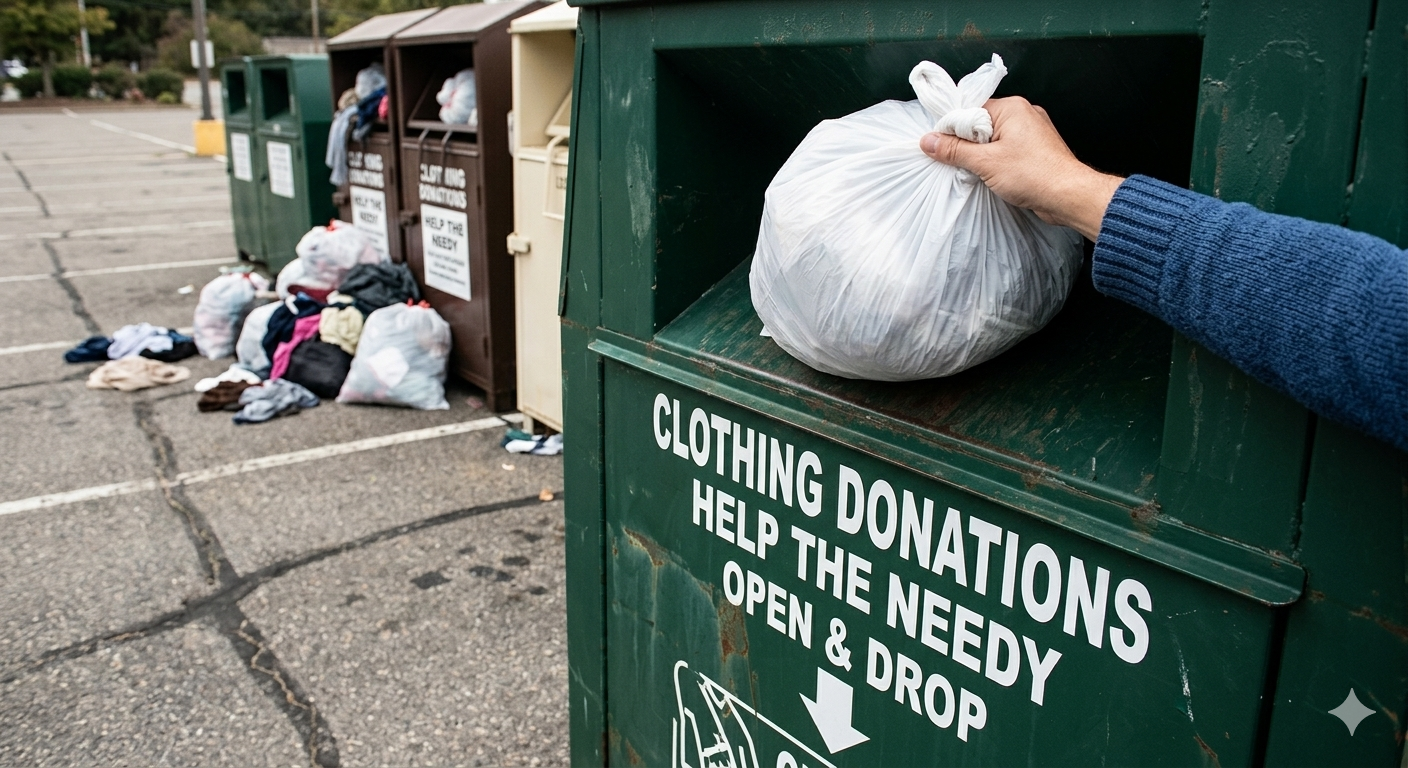
We’ve all done it. We stand in front of a closet overflowing with $12 shirts and $20 jeans, feel a pang of "consumption guilt," and bag them up. We drop them into a colorful bin at the mall or a donation center, comforted by the thought that someone, somewhere, will be thrilled to wear them.
In exchange, the brand often hands us a 15% discount code, which we immediately use to buy more.
It feels like a win-win. But in the global textile economy, this "circular" dream is becoming a nightmare. The "Resale" and "Recycle" labels on your favorite fast-fashion sites are rarely about saving the planet; they are about clearing space in your closet so you can fill it back up.
Here is the truth about what happens after you let go.
1. The "Resale" Loophole
Many brands have launched their own "Pre-Loved" sections. It’s a genius marketing move: it makes the brand look sustainable while allowing them to take a cut of the same item twice. However, these platforms only handle a tiny fraction of the billions of garments produced. Most fast-fashion items are made from "poly-blends"—a mix of plastic and cotton that is nearly impossible to separate and recycle. If an item isn't "on-trend" or in perfect condition, it doesn't make the resale cut.
2. The Global Trash Export
When a donation center receives more clothes than it can sell (which is almost always), the surplus is sold to for-profit textile graders. From there, your clothes are bundled into massive 100-pound bales and shipped across the ocean to markets in the Global South, such as Kantamanto in Ghana.
Local vendors buy these bales sight-unseen, hoping for quality items to resell. But because fast fashion quality has plummeted, much of what they find is "dead waste"—clothes that are torn, stained, or simply too cheap to be useful. Your "donation" often becomes a burden for someone else to bury.
3. The Landfill in the Desert
If the clothes can't be sold in local markets, they end up in places like the Atacama Desert in Chile. There, mountains of unsold western clothing—much of it with the original tags still attached—sit in the sun. Because these clothes are essentially made of plastic (polyester), they don't biodegrade. They sit for centuries, leaching chemicals into the ground and occasionally catching fire, releasing toxic smoke into the air.
4. The "Recycling" Illusion
You might see bins promising to "turn old clothes into new ones." While the technology exists to turn some textiles into insulation or rags, we are decades away from "fiber-to-fiber" recycling at a commercial scale. Less than 1% of all clothing is currently recycled into new garments. When a brand tells you they are "recycling" your polyester shirt, they are often just delaying its inevitable arrival at a landfill by a few months.
The hard truth of the modern fashion industry is that we cannot "recycle" our way out of overproduction. The only real solution isn't finding a better place to put your old clothes—it's buying fewer of them in the first place. The next time a brand offers you a discount for your "donations," remember: the most sustainable item in your wardrobe is the one you already own.
Comments
No comments yet. Be the first to share your thoughts.
Log in to add a comment.